Major News! Professor Hesheng Liu Named in 2025 World's Top 2% Scientists List
2025-09-28
Recently, Stanford University and the internationally renowned academic publisher Elsevier jointly released the 2025 edition of the "World's Top 2% Scientists" list. This list, based on multiple key metrics including the citation impact of global scholars, aims to objectively present the most influential leading scholars across various scientific fields.

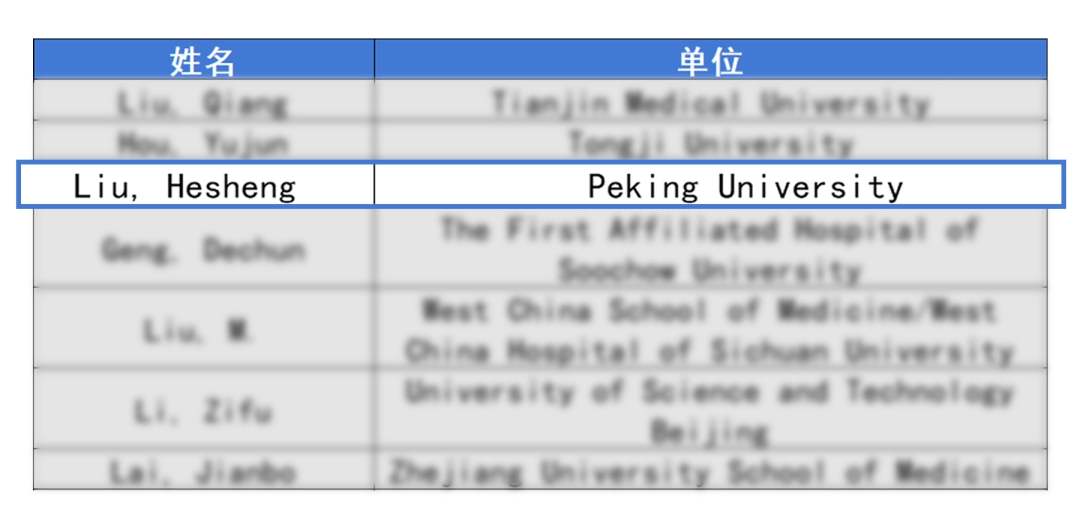
Professor Hesheng Liu from the Biomedical Pioneering Innovation Center (BIOPIC) at Peking University has been selected for this list, recognizing his pioneering contributions to the field of human brain functional mapping and precision brain science, which highlights the depth of his research and sustained international influence.
As the global pioneer of individual brain functional imaging technology, Professor Hesheng Liu has long been engaged in brain functional imaging research and is one of the primary contributors to advancing functional MRI towards clinical applications internationally. In 2015, Professor Liu's team published the first highly reproducible technique for personalized Brain Functional Sectors (pBFS) in Nature Neuroscience, making the visualization of a "unique brain map for each individual" possible. This technique was hailed as a "turning point for neuroimaging" by a Lancet sub-journal and has become a core tool for the subsequent clinical translation of individual brain function analysis and neuromodulation technologies.
Traditional research often aligns different individuals' brains to an average template for analysis, neglecting the uniqueness of each person's brain functional architecture. This leads to instability in many brain science findings at the individual level, making direct application to clinical diagnosis and treatment difficult. The personalized Brain Functional Sectors (pBFS) technology breaks through this bottleneck by precisely parcellating an individual's brain into 213 functionally distinct areas with clear boundaries and accurate definitions. Like drawing a "GPS map for the brain," it accurately locates personalized functional areas responsible for movement, language, memory, cognition, and other functions in each individual. This provides a key tool for addressing the challenge of individualized diagnosis and treatment for brain disorders and has been successfully applied to conditions such as autism, Parkinson's disease, Alzheimer's disease, and post-stroke sequelae, achieving remarkable clinical outcomes. For instance, the clinical response rate reached as high as 93% for post-stroke language and cognitive impairments, and 83% for Alzheimer's disease.
To date, Professor Hesheng Liu, as the first or corresponding author, has published over 150 papers in top-tier neuroscience journals such as Nature Neuroscience, Neuron, Nature Communications, and PNAS, with total citations exceeding 24,000.
Professor Liu's inclusion in this prestigious list not only signifies international recognition for his groundbreaking work at the forefront of brain science but also vividly exemplifies the crucial role Chinese scientific research strength plays in addressing globally significant scientific challenges. This achievement foreshadows that, as Chinese scientists continue to delve deeply into basic research and clinical translation, they will contribute more "Chinese Wisdom" and "Chinese Solutions" to global cutting-edge scientific fields, injecting strong momentum into the progress of human brain health endeavors.